Technology
Physical AI, built for the real world.
BinEnQ connects computer vision, edge intelligence, physical hardware and cloud services into one integrated learning system.
System architecture
From student to dashboard.
- Student
- NFC identification
- Waste presentation area
- Camera
- Edge intelligence
- AI detection / classification
- Student category decision
- Interaction engine
- Hardware controller
- Actuator
- Correct bin
- Local event record
- Secure synchronisation
- Cloud platform
- Gamification + analytics + dashboards
Six technical layers
A layered platform.
Edge-first architecture
Intelligence where the interaction happens.
The core interaction is designed to operate locally wherever practical, rather than requiring a cloud roundtrip for every interaction.
Local functions may include
- Student identification
- Camera input
- Waste detection
- AI inference
- Category selection
- Evaluation
- Feedback
- Lid control
- Local event recording
Cloud services support
- Synchronisation
- Dashboards
- Analytics
- Device management
- Gamification
- Cross-device functionality
Edge-first path
- Student
- Device
- Local AI
- Hardware
Responsibility split
AI understands. The control system acts.
AI does not directly control actuators.
AI Layer
“What is the item?” → classification result
Device Software
“What should happen?” → interaction decision
Hardware Controller
“Perform the physical action.”
Sensors / Feedback
“Confirm what actually happened.”
Hardware
The BinEnQ system, component by component.
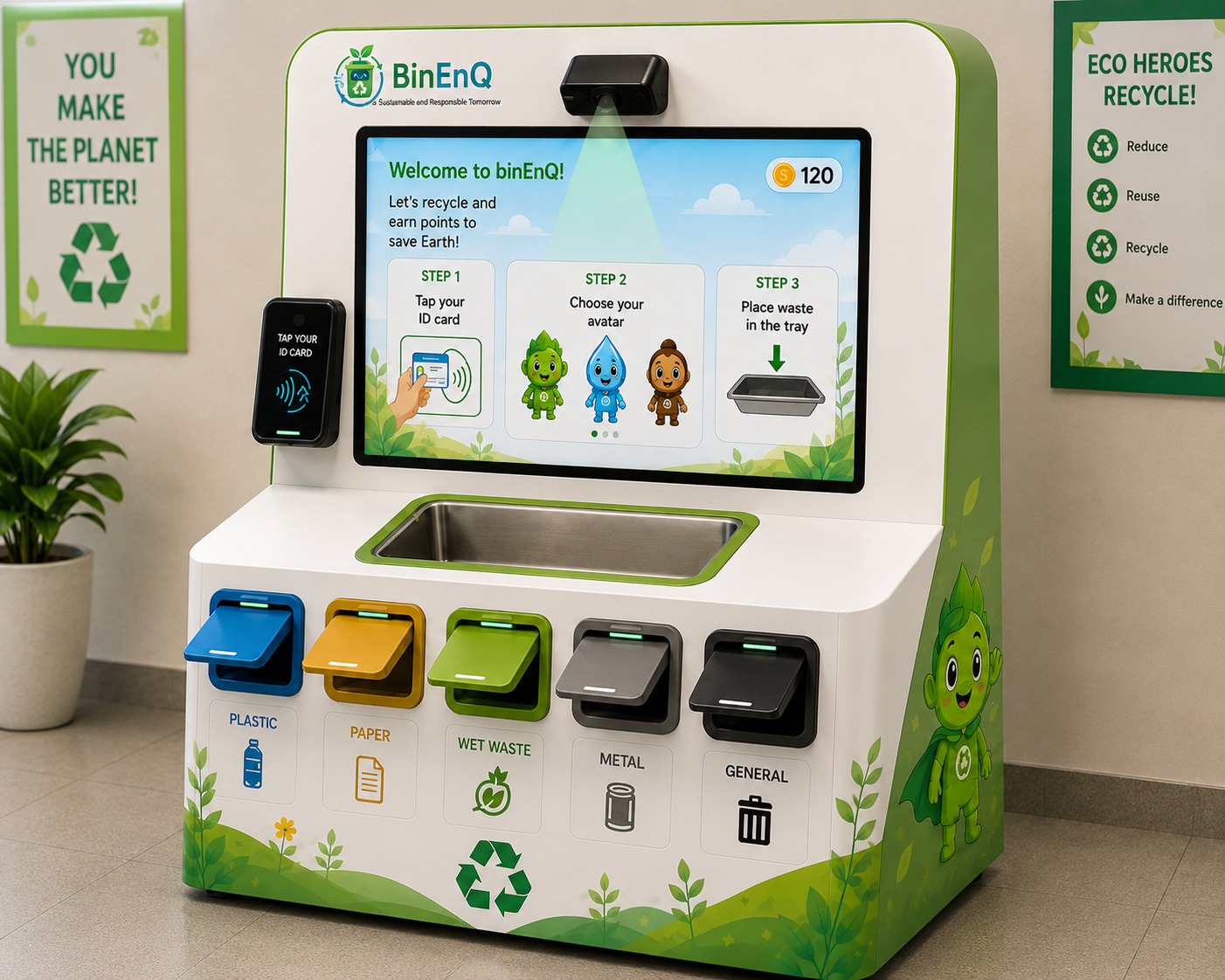
- Camera
- NFC reader
- Display
- Waste detection area
- Physical category buttons
- Edge computing unit
- Microcontroller
- Actuators
- Lid feedback sensors
- Compartments
- Sensors
- Connectivity
- Local storage
- Cloud synchronisation
Product operations
Devices, AI monitoring and platform management.
Platform Operations
BinEnQ product administrator view
34
118
112 online / 6 offline
9,120 / day
3 open
AI monitoring
Model version and device software version are visible per device.
Device events
- Lid actuator confirmation missing — device 042 (investigating)
- Connectivity interruption — device 017 (synchronised later)
- Software version rollout — 96% of fleet
- Configuration update — gamification rules, region B
RBAC
Authorised scopes
Per programme
Operational
Operational views avoid unnecessary student personal information.
Technical stack
Proposed / current baseline architecture.
Technology choices are a working baseline for the MVP and are not presented as permanently final.
The next generation shouldn't just know about sustainability.
They should practise it.
BinEnQ turns an everyday action into a learning opportunity — connecting Physical AI, gamification and sustainability intelligence to help build better waste-segregation habits.