Learning intelligence
Understand how students learn — not just what they throw away.
Each BinEnQ interaction can become a structured learning event. Appropriately authorised analysis can help identify what users understand, where misconceptions persist and where sustainability education may need reinforcement.
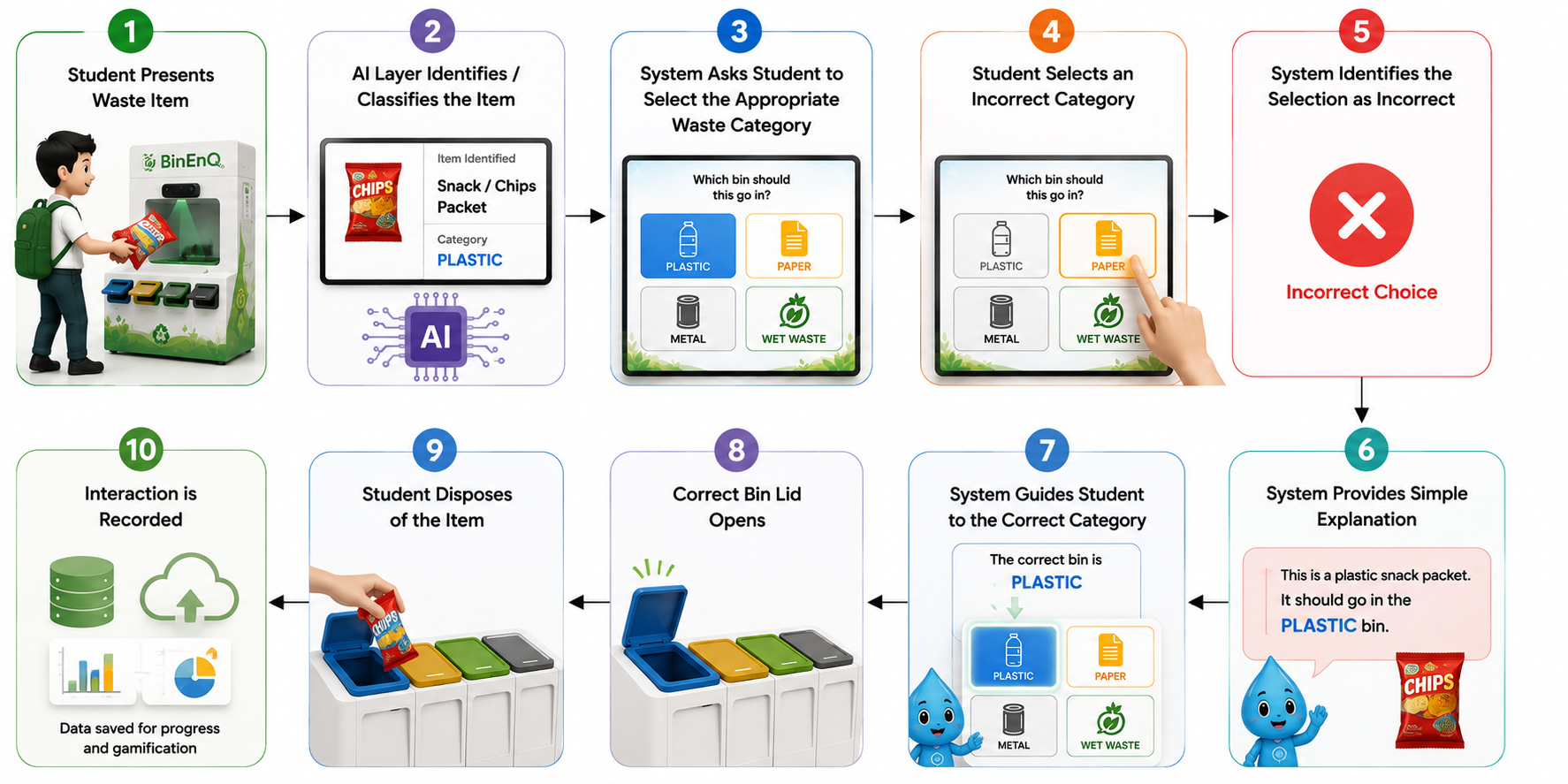
The loop
A continuous learning loop.
Interaction produces feedback. Feedback produces understanding. Understanding is measured, reinforced and measured again.
- Physical interaction
- Student decision
- Outcome
- Educational feedback
- Secure learning event
- Analysis
- Learning insight
- Reinforcement
- Further interaction
- Progress measurement
Learning signals
Potential indicators.
BinEnQ is designed to surface learning patterns, educational insights, participation trends and sustainability-learning progress.
- Waste-category understanding
- Recurring misconceptions
- Improvement over time
- Category-specific learning gaps
- Participation
- Learning consistency
- Engagement trends
- Class and cohort patterns
- Sustainability-learning progress
BinEnQ does not perform psychological profiling, behavioural diagnosis, academic diagnosis or intelligence scoring. Humans remain responsible for educational interpretation, governance and programme decisions.
Example outputs
Insights written for teaching, not judgement.
Paper may benefit from reinforcement
Recyclable versus contaminated paper appears to be a recurring point of confusion for this cohort.
Composite packaging
Mixed-material wrappers are frequently classified as plastic. A short activity could help.
Improvement observed
Organic-category decisions improved steadily over the last four weeks of participation.
Sustainability intelligence
From individual actions to meaningful insight.
- Interaction
- Structured event
- Aggregated pattern
- School insight
- Programme insight
- Potential sustainability action
Potential information includes
- Category confusion
- Participation
- Learning improvement
- Interaction trends
- Uncertain waste trends
- Programme engagement
BinEnQ does not claim environmental impact metrics unless actual measurement exists.
The next generation shouldn't just know about sustainability.
They should practise it.
BinEnQ turns an everyday action into a learning opportunity — connecting Physical AI, gamification and sustainability intelligence to help build better waste-segregation habits.